


Protect Your Mind, Protect Your Mission: September Focus on Mental Wellness and Recovery
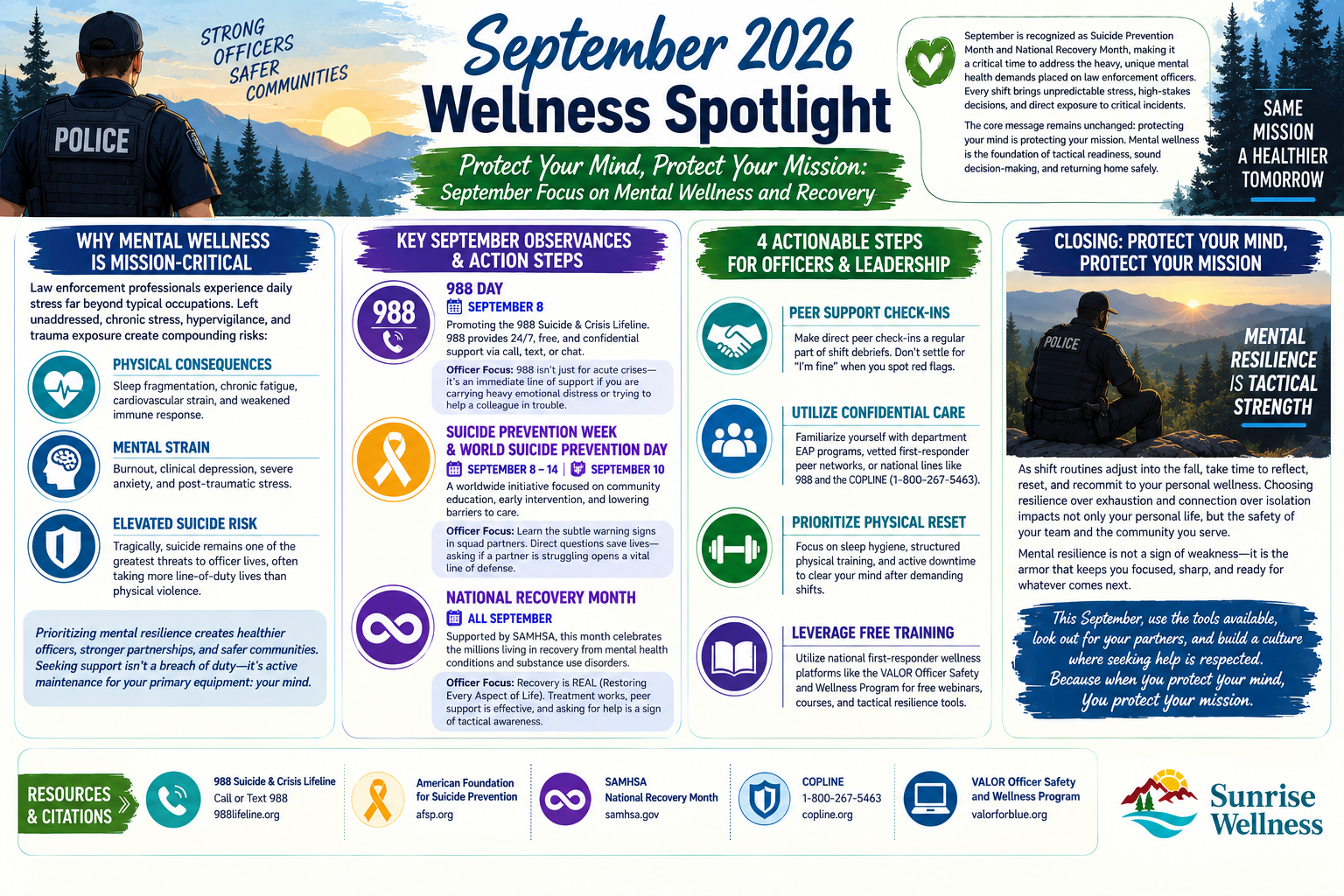
September is recognized as Suicide Prevention Month and National Recovery Month, making it a critical time to address the heavy, unique mental health demands placed on law enforcement officers. Every shift brings unpredictable stress, high-stakes decisions, and direct exposure to critical incidents. Over time, that weight accumulates.
The core message remains unchanged: protecting your mind is protecting your mission. Mental wellness is not an extra consideration—it is the foundation of tactical readiness, sound decision-making, and returning home safely at the end of every shift.
Law enforcement professionals experience daily stress far beyond typical occupations. Left unaddressed, chronic stress, hypervigilance, and trauma exposure create compounding risks:
Prioritizing mental resilience creates healthier officers, stronger partnerships, and safer communities. Seeking support or taking time to reset isn’t a breach of duty—it’s active maintenance for your primary equipment: your mind.
This month brings four distinct opportunities to highlight support networks, break down stigma, and build operational resilience across your department.
Promoting the 988 Suicide & Crisis Lifeline. 988 provides 24/7, free, and confidential support via call, text, or chat.
A worldwide initiative focused on community education, early intervention, and lowering barriers to care.
Supported by SAMHSA, National Recovery Month celebrates the millions of first responders and citizens living in recovery from mental health conditions and substance use disorders.
| Focus Area | Practical Action |
| Peer Support Check-Ins | Make direct peer check-ins a regular part of shift debriefs. Don’t settle for “I’m fine” when you spot red flags. |
| Utilize Confidential Care | Familiarize yourself with department EAP programs, vetted first-responder peer networks, or national lines like 988 and the COPLINE (1-800-267-5463). |
| Prioritize Physical Reset | Focus on sleep hygiene, structured physical training, and active downtime to clear your mind after demanding shifts. |
| Leverage Free Training | Utilize national first-responder wellness platforms like the VALOR Officer Safety and Wellness Program for free webinars, courses, and tactical resilience tools. |
As shift routines adjust into the fall, take time to reflect, reset, and recommit to your personal wellness. Choosing resilience over exhaustion and connection over isolation impacts not only your personal life, but the safety of your team and the community you serve.
Mental resilience is not a sign of weakness—it is tactical strength. It is the armor that keeps you focused, sharp, and ready for whatever comes next.
This September, use the tools available, look out for your partners, and build a culture where seeking help is respected. Because when you protect your mind, you protect your mission.