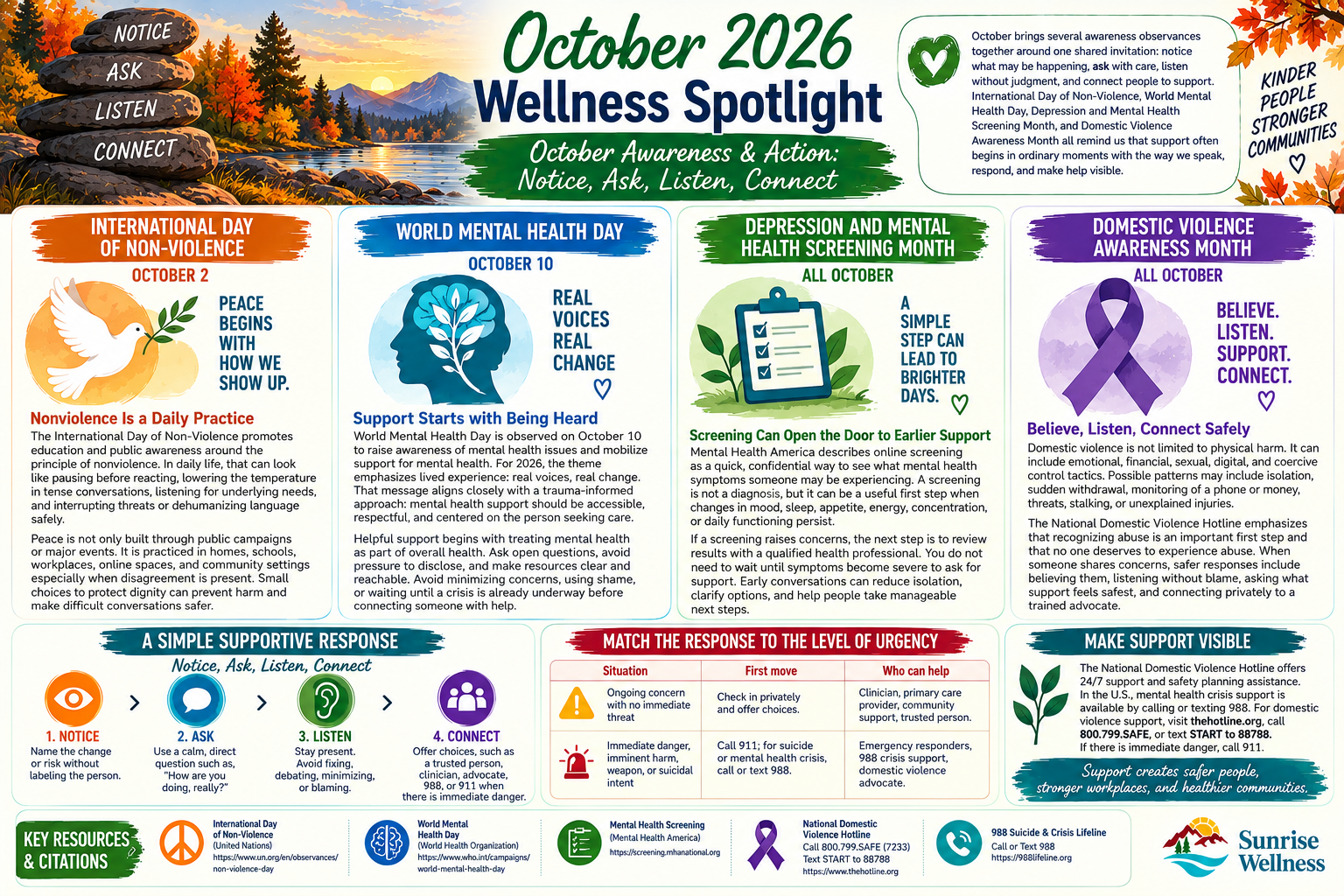


October Awareness & Action: Notice, Ask, Listen, Connect
Healthy Minds Start Young – and Stay Supported
November 2026: Supporting Early Childhood and Men’s Mental Health
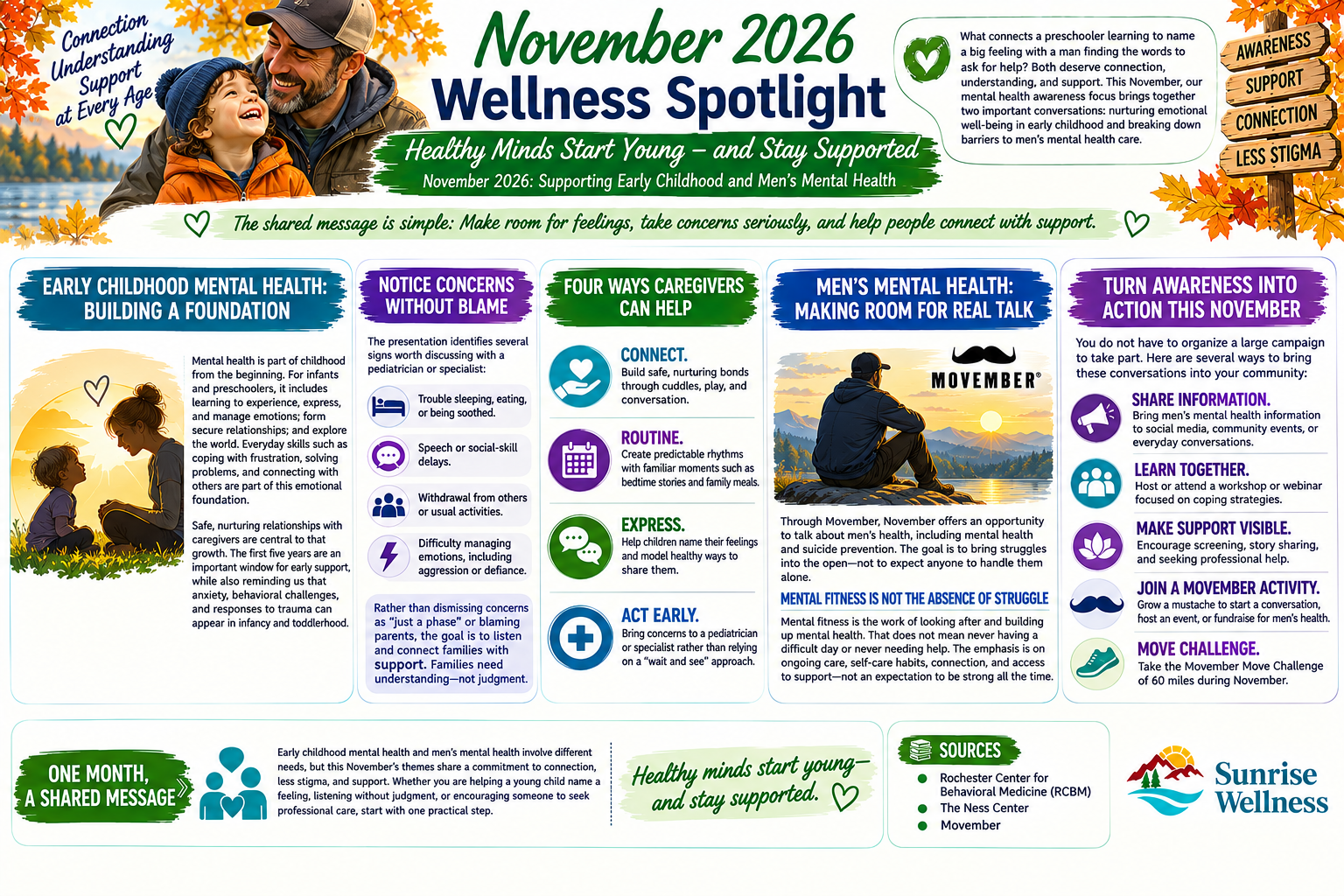
What connects a preschooler learning to name a big feeling with a man finding the words to ask for help? Both deserve connection, understanding, and support. This November, our mental health awareness focus brings together two important conversations: nurturing emotional well-being in early childhood and breaking down barriers to men’s mental health care.
The shared message is simple: Make room for feelings, take concerns seriously, and help people connect with support.
Mental health is part of childhood from the beginning. For infants and preschoolers, it includes learning to experience, express, and manage emotions; form secure relationships; and explore the world. Everyday skills such as coping with frustration, solving problems, and connecting with others are part of this emotional foundation.
Safe, nurturing relationships with caregivers are central to that growth. The presentation highlights the first five years as an important window for early support, while also reminding us that anxiety, behavioral challenges, and responses to trauma can appear in infancy and toddlerhood.
The presentation identifies several signs worth discussing with a pediatrician or specialist: trouble sleeping, eating, or being soothed; speech or social-skill delays; withdrawal; and difficulty managing emotions, including aggression or defiance.
Rather than dismissing concerns as “just a phase” or blaming parents, the goal is to listen and connect families with support. Families need understanding—not judgment.
The presentation’s second focus is men’s mental health. Through Movember, November offers an opportunity to talk about men’s health, including mental health and suicide prevention. The goal is to bring struggles into the open—not to expect anyone to handle them alone.
Depression and anxiety can go unrecognized and untreated. Awareness means more than naming these challenges: it means reducing stigma, encouraging honest conversations, and connecting men with support networks and professional care.
The presentation describes mental fitness as the work of looking after and building up mental health. That does not mean never having a difficult day or never needing help. The emphasis is on ongoing care, self-care habits, connection, and access to support—not an expectation to be strong all the time.
For friends, families, and communities, the invitation is to make asking for help something people can talk about openly. Awareness should create space for support, not another standard someone feels pressured to meet.
You do not have to organize a large campaign to take part. The presentation offers several ways to bring these conversations into your community:
Early childhood mental health and men’s mental health involve different needs, but this November’s themes share a commitment to connection, less stigma, and support. Whether you are helping a young child name a feeling, listening without judgment, or encouraging someone to seek professional care, start with one practical step.
Healthy minds start young—and stay supported.