Turning Silence Into Connection: Observing Mental Health Awareness Month 2026
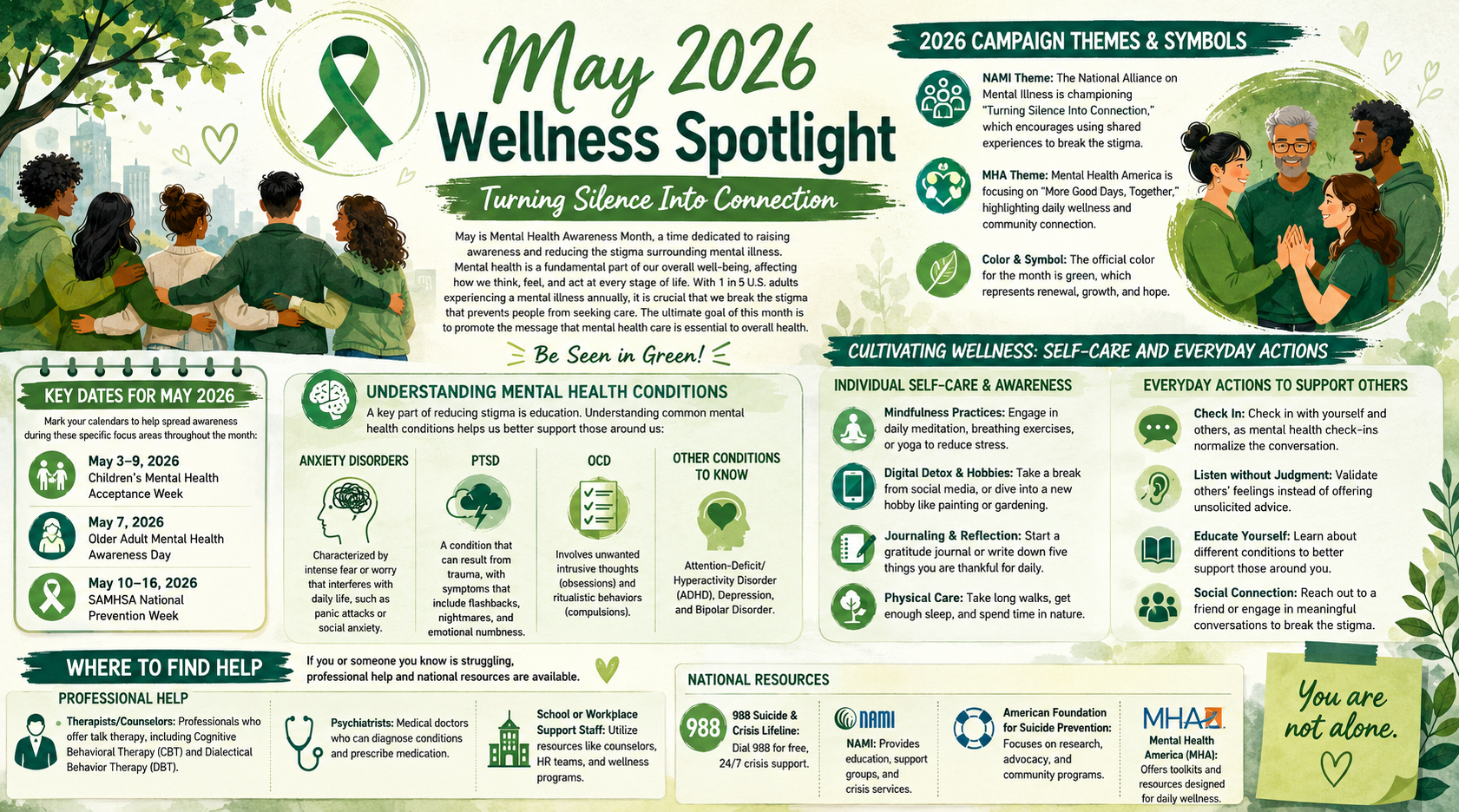
May is Mental Health Awareness Month, a time dedicated to raising awareness and reducing the stigma surrounding mental illness. Mental health is a fundamental part of our overall well-being, affecting how we think, feel, and act at every stage of life. With 1 in 5 U.S. adults experiencing a mental illness annually, it is crucial that we break the stigma that prevents people from seeking care. The ultimate goal of this month is to promote the message that mental health care is essential to overall health.
Here is a look at the themes for 2026, ways to practice self-care, and resources for finding support.
2026 Campaign Themes & Symbols
This year, major mental health organizations are focusing on the power of community and connection:
- NAMI Theme: The National Alliance on Mental Illness is championing “Turning Silence Into Connection,” which encourages using shared experiences to break the stigma.
- MHA Theme: Mental Health America is focusing on “More Good Days, Together,” highlighting daily wellness and community connection.
- Color & Symbol: The official color for the month is green, which represents renewal, growth, and hope.
- Take Action: You can show your support by participating in the “Be Seen in Green” campaign!
Key Dates for May 2026
Mark your calendars to help spread awareness during these specific focus areas throughout the month:
- May 3-9, 2026: Children’s Mental Health Acceptance Week.
- May 7, 2026: Older Adult Mental Health Awareness Day.
- May 10-16, 2026: SAMHSA National Prevention Week.
Understanding Mental Health Conditions
A key part of reducing stigma is education. Understanding common mental health conditions helps us better support those around us:
- Anxiety Disorders: Characterized by intense fear or worry that interferes with daily life, such as panic attacks or social anxiety.
- PTSD: A condition that can result from trauma, with symptoms that include flashbacks, nightmares, and emotional numbness.
- OCD: Involves unwanted intrusive thoughts (obsessions) and ritualistic behaviors (compulsions).
- Other Conditions to Know: Attention-Deficit/Hyperactivity Disorder (ADHD), Depression, and Bipolar Disorder.
Cultivating Wellness: Self-Care and Everyday Actions
Taking care of your mental health is an ongoing practice. Here are some actionable ways to prioritize your well-being and support others:
Individual Self-Care & Awareness
- Mindfulness Practices: Engage in daily meditation, breathing exercises, or yoga to reduce stress.
- Digital Detox & Hobbies: Take a break from social media, or dive into a new hobby like painting or gardening.
- Journaling & Reflection: Start a gratitude journal or write down five things you are thankful for daily.
- Physical Care: Take long walks, get enough sleep, and spend time in nature.
Everyday Actions to Support Others
- Check In: Check in with yourself and others, as mental health check-ins normalize the conversation.
- Listen without Judgment: Validate others’ feelings instead of offering unsolicited advice.
- Educate Yourself: Learn about different conditions to better support those around you.
- Social Connection: Reach out to a friend or engage in meaningful conversations to break the stigma.
Where to Find Help
If you or someone you know is struggling, professional help and national resources are available.
Professional Help
- Therapists/Counselors: Professionals who offer talk therapy, including Cognitive Behavioral Therapy (CBT) and Dialectical Behavior Therapy (DBT).
- Psychiatrists: Medical doctors who can diagnose conditions and prescribe medication.
- School or Workplace Support Staff: Utilize resources like counselors, HR teams, and wellness programs.
National Resources
- 988 Suicide & Crisis Lifeline: Dial 988 for free, 24/7 crisis support.
- NAMI: Provides education, support groups, and crisis services.
- American Foundation for Suicide Prevention: Focuses on research, advocacy, and community programs.
- Mental Health America (MHA): Offers toolkits and resources designed for daily wellness.